Universal Pipette Tips
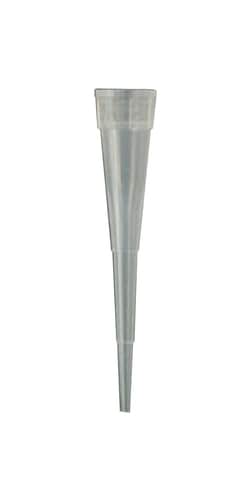
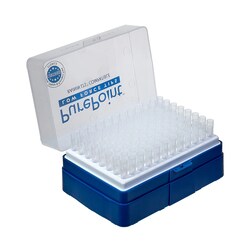
Disposable pipette tips designed to fit single and multichannel pipettes from most manufacturers; offer acceptable performance compared to pipette specific tips and can be used with a variety of pipette models.
Single-use universal pipette tips are designed for compatibility with most mechanical and electronic single and multichannel pipettors.
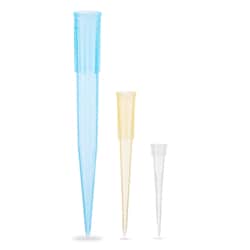
Universal pipette tips are available in a range of types, sizes, colors, styles, and packaging configurations and may be designed for specific purposes or tasks.
- Capacity or volume based on the pipettor size
- Filters to reduce contamination and cross-contamination
- Color
- Sterility or autoclavability
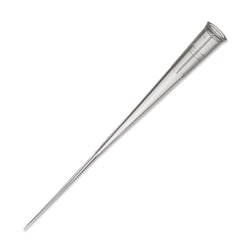
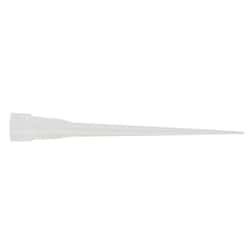
- Tip style: beveled, tapered, wide bore, round, flat, or gel-loading
- Length: short or extended
- Purity: metal-free or DNase-, RNase-, ATP-, Bioburden-, PCR inhibitor-, endotoxin-, or pyrogen-free for genomic and biologic applications
- Surface treatments to reduce retention
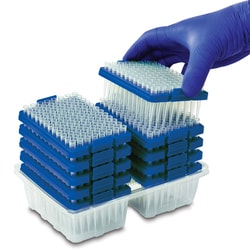
- Packaging options to help facilitate re-stocking or eliminate waste
- (3)
- (2)
- (2)
- (1)
- (108)
- (1)
- (1)
- (1)
- (28)
- (9)
- (4)
- (7)
- (1)
- (1)
- (5)
- (6)
- (8)
- (37)
- (5)
- (36)
- (1)
- (9)
- (3)
- (2)
- (4)
- (8)
- (8)
- (3)
- (8)
- (148)
- (1)
- (26)
- (189)
- (9)
- (6)
- (6)
- (2)
- (4)
- (1)
- (31)
- (1)
- (66)
- (1)
- (5)
- (4)
- (1)
- (7)
- (165)
- (1)
- (2)
- (19)
- (40)
- (2)
- (1)
- (3)
- (1)
- (1)
- (1)
- (9)
- (11)
- (41)
- (2)
- (2)
- (1)
- (61)
- (1)
- (1)
- (4)
- (26)
- (208)
- (7)
- (16)
- (2)
- (76)
- (6)
- (1)
- (11)
- (7)
- (5)
- (12)
- (2)
- (5)
- (1)
- (37)
- (5)
- (39)
- (1)
- (1)
- (2)
- (6)
- (2)
- (1)
- (5)
- (788)
- (4)
- (837)
- (7)
- (82)
- (595)
- (6)
- (186)
- (8)
- (4)
- (16)
- (24)
- (1)
- (7)
- (3)
- (411)
- (7)
- (4)
- (29)
- (1)
- (21)
- (2)
- (8)
- (1)
- (132)
- (37)
- (25)
- (42)
- (188)
- (28)
- (218)
- (36)
- (11)
- (27)
- (15)
- (681)
- (2)
- (30)
- (1)
- (2)
- (1)
- (182)
- (1)
- (6)
- (14)
- (1)
- (1)
- (1)
- (16)
- (146)
- (1)
- (1)
- (29)
- (3)
- (67)
- (212)
- (5)
- (166)
- (103)
- (68)
- (33)
- (39)
- (11)
- (2)
- (213)
- (10)
- (1)
- (10)
- (10)
- (111)
- (3)
- (1)
- (17)
- (25)
- (27)
- (4)
- (97)
- (1)
- (3)
- (11)
- (286)
- (9)
- (1)
- (4)
- (1)
- (251)
- (33)
- (6)
- (6)
Filtered Search Results
ABclonal Technology IDH3A Rabbit pAb
Small and Specialty Supplier Partner
Small and/or specialty supplier based on Federal laws and SBA requirements.
Learn More
Small and/or specialty supplier based on Federal laws and SBA requirements.
Learn More
Isocitrate dehydrogenases catalyze the oxidative decarboxylation of isocitrate to 2-oxoglutarate. These enzymes belong to two distinct subclasses, one of which utilizes NAD(+) as the electron acceptor and the other NADP(+). Five isocitrate dehydrogenases have been reported three NAD(+)-dependent isocitrate dehydrogenases, which localize to the mitochondrial matrix, and two NADP(+)-dependent isocitrate dehydrogenases, one of which is mitochondrial and the other predominantly cytosolic. NAD(+)-dependent isocitrate dehydrogenases catalyze the allosterically regulated rate-limiting step of the tricarboxylic acid cycle. Each isozyme is a heterotetramer that is composed of two alpha subunits, one beta subunit, and one gamma subunit. The protein encoded by this gene is the alpha subunit of one isozyme of NAD(+)-dependent isocitrate dehydrogenase.
Non-distribution item offered as a customer accommodation; additional freight charges may apply.
Learn More
ABclonal Technology ARCN1 Rabbit pAb
Small and Specialty Supplier Partner
Small and/or specialty supplier based on Federal laws and SBA requirements.
Learn More
Small and/or specialty supplier based on Federal laws and SBA requirements.
Learn More
This gene maps in a region, which include the mixed lineage leukemia and Friend leukemia virus integration 1 genes, where multiple disease-associated chromosome translocations occur. It is an intracellular protein. Archain sequences are well conserved among eukaryotes and this protein may play a fundamental role in eukaryotic cell biology. It has similarities to heat shock proteins and clathrin-associated proteins, and may be involved in vesicle structure or trafficking.
Non-distribution item offered as a customer accommodation; additional freight charges may apply.
Learn More
ABclonal Technology Syntaxin 4 Rabbit mAb
Small and Specialty Supplier Partner
Small and/or specialty supplier based on Federal laws and SBA requirements.
Learn More
Small and/or specialty supplier based on Federal laws and SBA requirements.
Learn More
Enables sphingomyelin phosphodiesterase activator activity. Involved in several processes, including cornified envelope assembly, positive regulation of immune effector process, and positive regulation of protein localization. Located in several cellular components, including basolateral plasma membrane, cytoplasmic vesicle, and lamellipodium. Part of SNARE complex. Is active in glutamatergic synapse and postsynapse.
Non-distribution item offered as a customer accommodation; additional freight charges may apply.
Learn More
ABclonal Technology PAX3 Rabbit pAb
Small and Specialty Supplier Partner
Small and/or specialty supplier based on Federal laws and SBA requirements.
Learn More
Small and/or specialty supplier based on Federal laws and SBA requirements.
Learn More
This gene is a member of the paired box (PAX) family of transcription factors. Members of the PAX family typically contain a paired box domain and a paired-type homeodomain. These genes play critical roles during fetal development. Mutations in paired box gene 3 are associated with Waardenburg syndrome, craniofacial-deafness-hand syndrome, and alveolar rhabdomyosarcoma. The translocation t(2,13)(q35,q14), which represents a fusion between PAX3 and the forkhead gene, is a frequent finding in alveolar rhabdomyosarcoma. Alternative splicing results in transcripts encoding isoforms with different C-termini.
Non-distribution item offered as a customer accommodation; additional freight charges may apply.
Learn More
ABclonal Technology UCP3 Rabbit pAb
Small and Specialty Supplier Partner
Small and/or specialty supplier based on Federal laws and SBA requirements.
Learn More
Small and/or specialty supplier based on Federal laws and SBA requirements.
Learn More
Mitochondrial uncoupling proteins (UCPs) are part of the mitochondrial anion carrier protein (MACP) family. They uncouple oxidative phosphorylation from ATP synthesis, dissipating energy as heat, known as the mitochondrial proton leak. UCPs transfer anions across the mitochondrial membrane and reduce the mitochondrial membrane potential. The expression of UCPs varies by tissue; this gene is primarily expressed in skeletal muscle. Its protein product is believed to protect mitochondria from lipid-induced oxidative stress. When fatty acid supply exceeds oxidation capacity, UCP facilitates the export of excess fatty acids from mitochondria. UCPs contain three solcar protein domains typical of MACPs. Two splice variants of this gene have been identified.
Non-distribution item offered as a customer accommodation; additional freight charges may apply.
Learn More
ABclonal Technology C2CD5 Rabbit pAb
Small and Specialty Supplier Partner
Small and/or specialty supplier based on Federal laws and SBA requirements.
Learn More
Small and/or specialty supplier based on Federal laws and SBA requirements.
Learn More
Enables calcium ion binding activity and calcium-dependent phospholipid binding activity. Involved in cellular response to insulin stimulus, intracellular protein transmembrane transport, and positive regulation of transport. Located in several cellular components, including centriolar satellite, cytoplasmic vesicle membrane, and ruffle membrane.
Non-distribution item offered as a customer accommodation; additional freight charges may apply.
Learn More
ABclonal Technology NDUFB11 Rabbit pAb
Small and Specialty Supplier Partner
Small and/or specialty supplier based on Federal laws and SBA requirements.
Learn More
Small and/or specialty supplier based on Federal laws and SBA requirements.
Learn More
The protein encoded by this gene is a subunit of the multisubunit NADHubiquinone oxidoreductase (complex I). Mammalian complex I is located at the mitochondrial inner membrane. This protein has NADH dehydrogenase activity and oxidoreductase activity. It transfers electrons from NADH to ubiquinone. Mutations in the human gene are associated with linear skin defects with multiple congenital anomalies 3 and mitochondrial complex I deficiency.
Non-distribution item offered as a customer accommodation; additional freight charges may apply.
Learn More
ABclonal Technology KANK2 Rabbit pAb
Small and Specialty Supplier Partner
Small and/or specialty supplier based on Federal laws and SBA requirements.
Learn More
Small and/or specialty supplier based on Federal laws and SBA requirements.
Learn More
This gene encodes a member of the KN motif and ankyrin repeat domains (KANK) family of proteins, which play a role in cytoskeletal formation by regulating actin polymerization. The encoded protein functions in the sequestration of steroid receptor coactivators and possibly other proteins. Mutations in this gene are associated with impaired kidney podocyte function and nephrotic syndrome, and keratoderma and woolly hair.
Non-distribution item offered as a customer accommodation; additional freight charges may apply.
Learn More
ABclonal Technology RAB1A Rabbit pAb
Small and Specialty Supplier Partner
Small and/or specialty supplier based on Federal laws and SBA requirements.
Learn More
Small and/or specialty supplier based on Federal laws and SBA requirements.
Learn More
This gene encodes a member of the Ras superfamily of GTPases. Members of the gene family cycle between inactive GDP-bound and active GTP-bound forms. This small GTPase controls vesicle traffic from the endoplasmic reticulum to the Golgi apparatus. Multiple alternatively spliced transcript variants have been identified for this gene which encode different protein isoforms.
Non-distribution item offered as a customer accommodation; additional freight charges may apply.
Learn More
ABclonal Technology GNAT3 Rabbit pAb
Small and Specialty Supplier Partner
Small and/or specialty supplier based on Federal laws and SBA requirements.
Learn More
Small and/or specialty supplier based on Federal laws and SBA requirements.
Learn More
Sweet, bitter, and umami tastes are transmitted from taste receptors by a specific guanine nucleotide binding protein. The protein encoded by this gene is the alpha subunit of this heterotrimeric G protein, which is found not only in the oral epithelium but also in gut tissues. Variations in this gene have been linked to metabolic syndrome.
Non-distribution item offered as a customer accommodation; additional freight charges may apply.
Learn More
ABclonal Technology ZNF248 Rabbit pAb
Small and Specialty Supplier Partner
Small and/or specialty supplier based on Federal laws and SBA requirements.
Learn More
Small and/or specialty supplier based on Federal laws and SBA requirements.
Learn More
Predicted to enable DNA-binding transcription repressor activity, RNA polymerase II-specific and RNA polymerase II transcription regulatory region sequence-specific DNA binding activity. Predicted to be involved in negative regulation of transcription by RNA polymerase II. Predicted to be located in nucleus.
Non-distribution item offered as a customer accommodation; additional freight charges may apply.
Learn More
ABclonal Technology FLII Rabbit pAb
Small and Specialty Supplier Partner
Small and/or specialty supplier based on Federal laws and SBA requirements.
Learn More
Small and/or specialty supplier based on Federal laws and SBA requirements.
Learn More
This gene encodes a protein with a gelsolin-like actin binding domain and an N-terminal leucine-rich repeat-protein protein interaction domain. The protein is similar to a Drosophila protein involved in early embryogenesis and the structural organization of indirect flight muscle. The gene is located within the Smith-Magenis syndrome region on chromosome 17.
Non-distribution item offered as a customer accommodation; additional freight charges may apply.
Learn More
ABclonal Technology TET2 Rabbit pAb
Small and Specialty Supplier Partner
Small and/or specialty supplier based on Federal laws and SBA requirements.
Learn More
Small and/or specialty supplier based on Federal laws and SBA requirements.
Learn More
The protein encoded by this gene is a methylcytosine dioxygenase that catalyzes the conversion of methylcytosine to 5-hydroxymethylcytosine. The encoded protein is involved in myelopoiesis, and defects in this gene have been associated with several myeloproliferative disorders. Two variants encoding different isoforms have been found for this gene.
Non-distribution item offered as a customer accommodation; additional freight charges may apply.
Learn More
ABclonal Technology CHCHD1 Rabbit pAb
Small and Specialty Supplier Partner
Small and/or specialty supplier based on Federal laws and SBA requirements.
Learn More
Small and/or specialty supplier based on Federal laws and SBA requirements.
Learn More
Enables RNA binding activity. Predicted to be involved in mitochondrial translation. Located in cytosol, mitochondrion, and nuclear lumen.
Non-distribution item offered as a customer accommodation; additional freight charges may apply.
Learn More
ABclonal Technology ADAM11 Rabbit pAb
Small and Specialty Supplier Partner
Small and/or specialty supplier based on Federal laws and SBA requirements.
Learn More
Small and/or specialty supplier based on Federal laws and SBA requirements.
Learn More
This gene encodes a member of the ADAM (a disintegrin and metalloprotease) protein family. Members of this family are membrane-anchored proteins structurally related to snake venom disintegrins, and have been implicated in a variety of biological processes involving cell-cell and cell-matrix interactions, including fertilization, muscle development, and neurogenesis. The encoded preproprotein is proteolytically processed to generate the mature protease. This gene represents a candidate tumor suppressor gene for human breast cancer based on its location within a minimal region of chromosome 17q21 previously defined by tumor deletion mapping. Alternative splicing results in multiple transcript variants, at least one of which encodes an isoform that is proteolytically processed.
Non-distribution item offered as a customer accommodation; additional freight charges may apply.
Learn More